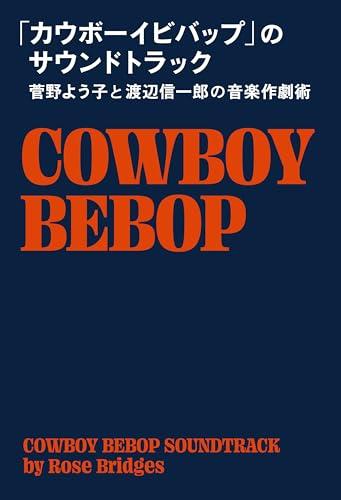
How did "Cowboy Bebop" revolutionize anime music?
Even now, 25 years after its broadcast, its "space jazz" concept remains unparalleled.
This is the first music book to explore the soundtrack of this series.
Commentary by Takayuki Komuro
How does Yoko Kanno's music skillfully support the characters' inner thoughts and the story's progression?
How does Shinichiro Watanabe integrate music with visual storytelling?
The author, a former contributor to Anime News Network, North America's largest anime website, interviewed Yoko Kanno, director Shinichiro Watanabe, Emily Bindiger, Steve Conte, and other members of the soundtrack production team for this book.
The book explores the art of creating soundtracks that are not just background music, but function as part of the story.
<Main Table of Contents>
Introduction: What is Musical Storytelling?
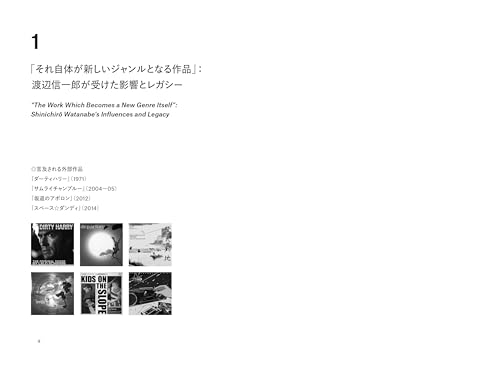
1. "A Work that Becomes a New Genre in Its Own": Shinichiro Watanabe's Influences and Legacy
2. Collected Blues: Analyzing Yoko Kanno's Music
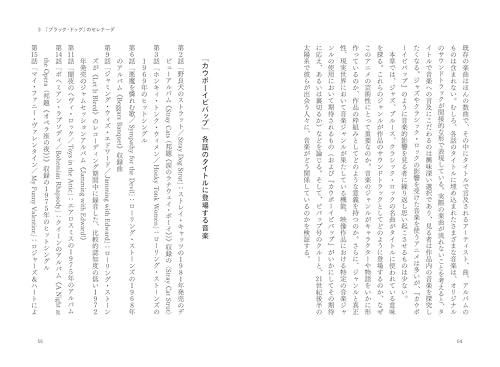
3. "Black Dog" Serenade: Bebop, Classic Rock, and Jazz Standards
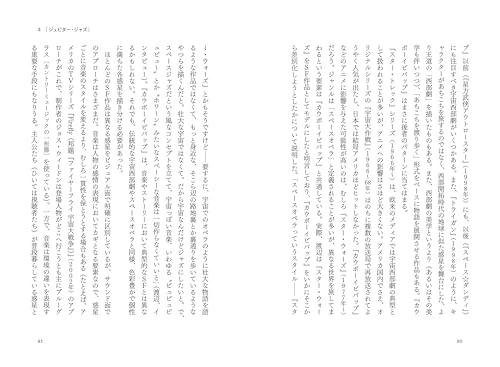
4. "Jupiter Jazz": Transcription of the Bebop World
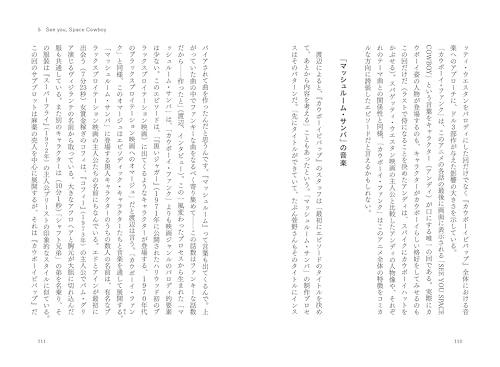
5. "See You, Space Cowboy": Music and Genre Parody in "Cowboy Funk" and "Mushroom Samba"
6. "Jamming with Edward (and Jet & Faye)": Character Themes
7. "Ballad of the Fallen Angels": Spike Spiegel's Musical Journey
Conclusion: You're Gonna Carry That Weight
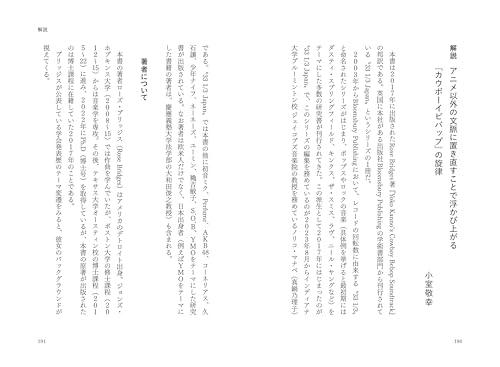
Commentary: The Melodies of "Cowboy Bebop" Emerge When Placed in a Non-Anime Context (Takayuki Komuro)


 Reembolso por não entrega

![[CD] COWBOY BEBOP BLUE Trilha Sonora Original 3 Edição Normal Yoko Kanno VTCL-60328](https://img.joomcdn.net/d77a372c67fde38e28b9318166e7c280b324c6ca_100_75.jpeg)


![Cowboy Bebop Série Completa [Blu-ray] [Importado]](https://img.joomcdn.net/2f96957cb754b59af7d5d81c03fa4e940a064586_72_100.jpeg)


![[CD] Cowboy Bebop Tank! O! Melhor! Reedição Yoko Kanno & Seatbelts VTCL-60330 NOVO](https://img.joomcdn.net/4be10af6d179c148c6fe88b2831b891a17732f10_100_75.jpeg)