Our store offers a curated selection of genuine Japanese products. You can shop with complete peace of mind knowing that all our items are authentic. Please note that the instructions and manual for this product may only be available in Japanese.
1. KEY FEATURES:
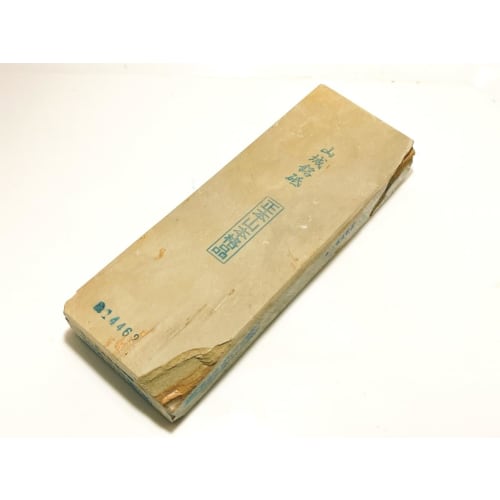
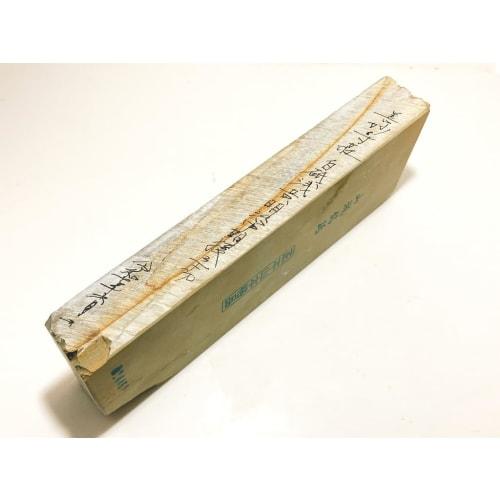
- 76 x 215 x 32 mm 1,325g For hard tools
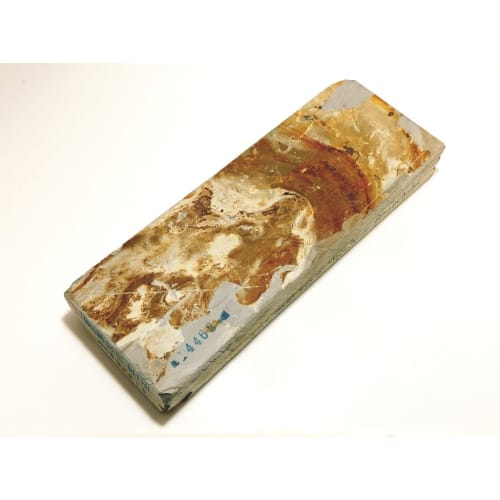
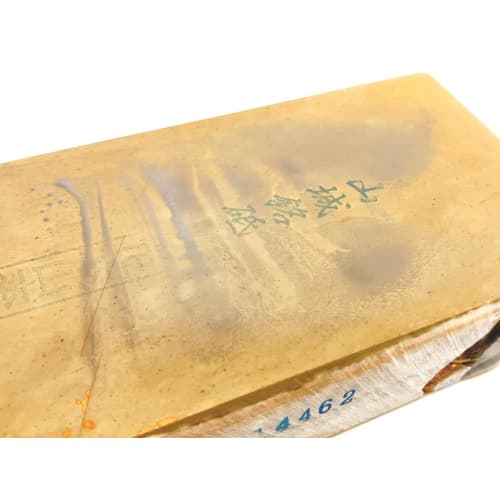
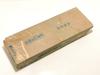
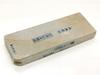
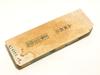
- Digging a short wound on the lower right side. A beautiful light green whetstone. In the middle of the Meiji era, when Takao Zenmyoji-so was removed during national highway widening construction, the rough stone that was made into anko for the stone wall was reforged and commercialized. Since it is red bean paste, there is no freezing. The mica has risen. I can't go back to being a stone that has only been cut and polished.
- Siliceous slate from Umegahata, Ukyo Ward, Kyoto City, Yamashiro Province #6,000~24,000 grade The harder it is, the more practice it requires, but the higher the chance of fineness. Because of the round bottom continuous striations, it has a long cutting time of about 70% threshold, and the artificial grinding wheel grain size ratio makes it difficult to create a tasteless mirror-like surface, making it easy to bring out contrasts derived from differences in forge tangents, materials, and carbon content.
- The blacker the stone, the harder and finer the stone tends to be. If it is hard, it will lose its self-sharpening ability, so depending on your purpose and level of skill, you should continue sharpening while performing Kyonagakake each time.
2. PRODUCT DESCRIPTION:
Product Description A natural whetstone produced in Yamashiro Province, in present-day Kyoto City, which originated from the invention of the Japanese sword. It has a history of nearly 900 years since the end of the Heian period, and is known as the most precise and prestigious whetstone of the slate type whetstone. It was the most important military resource in the long-lasting sword era, and was under the control of the shogunate from Kamakura to the end of the Edo period. In terms of values up until the early modern period, it was strongly characterized as a factory material, and in modern times it could be said to be a uranium mine essential for nuclear weapons, so it needed to be strictly controlled.Items produced in Iyo Province are said to have already been distributed in the Seto Inland Sea during the Kofun period, and are famous as masters of the world's oldest and largest igneous rock system, said to be over 1,500 years old. Our country's precious stone resources have the potential to completely transform a nation and a nation. Because of its unique iron sand metallurgy, which had a much lower yield due to the lack of iron ore, and because it was a remote island in the Far East, the fact that it was the final destination for the introduction of iron was a fatal condition, like losing a limb in the creation of the Iron Age civilization. History and tradition will prove that consumables that allow you to process harder, more tenacious iron products as you wish are Japan's most famous abrasive resource. Despite its poor location, it became the oldest and largest wooden building in the world. Despite being a latecomer to the area, in the Middle Ages they had already invented the world's best iron products, allowing the sword industry to continue for nearly 700 years. Since most of recorded history belongs to the iron age, iron tools became our hands and feet, and were the very medium of use for making things. Japan is today known as a nation of manufacturing groups, as it has been proven that Japan was already able to manufacture the world's strongest iron products and craft tools around 1,300 years ago, when Horyuji Temple was founded in Asuka. It is true that in creating iron, he fought back against adversity, even the loss of a limb. The backing of the famous whetstone resource, which is irreplaceable and precious, and endowed with uniqueness and authenticity, erased the rate-limiting decision of whether or not it could be sharpened during the development of steel with its maximum whetstone performance. If we estimate Japan's various resources based on values up to modern times, we are a resource-rich country, even though 70% of the country is covered in mountains and forests. However, because the Japanese archipelago is made up of five plates crowded together, in exchange for enduring numerous natural disasters, each region was allowed to extract whetstones, albeit in varying quantities. Having accepted the idea of being ruled by a mountainous and majestic natural environment that has both harshness and abundance (carrot and stick), our hearts may have learned patience, cooperation, and compromise, and foresaw the existence of nature worship and the existence of 8 million gods (various resources and blessings), which we are grateful for every day, and have sublimated into the foundation of the Shinto spirit. This is perhaps why we are able to pass on Japan's most proud strengths and charms, which are not limited to material well-being, being relatively tolerant of different cultures and religions, and being able to repeatedly absorb and integrate them. Caution (Disclaimer) > Please be sure to read The whetstone is a consumable item. The size is the maximum size of the cross.
3. PRODUCT DIMENSIONS & WEIGHT:
- Weight: 1.48 kg
- Dimensions: 15.0 x 12.0 x 4.0 cm
4. SPECIFICATIONS:
- Brand: 330mate Sazure Meisho
- Manufacturer: #330mate Sazere Meito Co., Ltd.