[JOOM Certified Store | Japan]
Quality products from Japan, shipped safely to your destination.
[Important Notice]
Items are made for the Japanese domestic market:
- Products: Official Japanese market items (Manufacturing origin varies by model).
- Voltage: AC 100V / Type A plug (Voltage converter may be needed).
- Language: Japanese by default (Unless specified in title/images).
- Region: Please check system compatibility before ordering.
Follow our shop for new arrivals! Please leave a review when your item arrives.
―・―・―・―・―・―・―・―・―・―・―・―・―
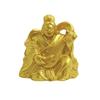
Dimensions: 6.2cm high x 6.5cm wide x 4cm deep / Material: Alloy with gold plating finish / Weight: Approximately 320g / Place of production: Takaoka, Toyama Prefecture / Note: Made by Makita Shuun
Benzaiten is counted as one of the Seven Lucky Gods and is the goddess of learning, arts and wealth, and is widely worshipped by the general public.
Comes with a certificate issued by Takita Shoten, which is proof of Takita Shoten brand quality.
Comes with a certificate issued by Takita Shoten, which is proof of Takita Shoten brand quality.
Benzaiten is counted as one of the Seven Lucky Gods and is the goddess of learning, arts and wealth, and is widely worshipped by the general public.
The history of worship of the Seven Lucky Gods dates back to the Kamakura period, when worship of Ebisu (the guardian deity of fishing, labor, business, etc.), an ancient Japanese guardian deity, was joined by worship of Daikokuten (the god of bountiful harvests and food and drink) and Benzaiten (the god of music, wisdom, eloquence, and wealth), who came from India via China.
During the Muromachi period, as faith in these three gods deepened among the common people, four other gods were added: Bishamonten (the guardian deity of the path of human morality and Buddhism), Hotei (the god of fortune and prosperity, including divination of good and bad fortune and family harmony), Fukurokuju (the god of good fortune, stability in life, and longevity), and Jurojin (the god of longevity and prolonged life), and they are said to have become symbols of faith as the Seven Lucky Gods who answer people's wishes.
During the Edo period, pilgrimages to the Seven Lucky Gods became popular in various places, in search of good fortune and good luck for business prosperity, good health, and the fulfillment of various wishes.


 No-delivery refund